

The beach is one of the most beautiful places on earth. It is also one of the harshest environments for your eyes. Between the blazing sun, the glare bouncing off water, and the fine sand carried by the wind, your eyes face a serious challenge every time you visit the shore.
Choosing the right sunglasses is not just about looking good. It is about protecting your vision and staying comfortable all day long. However, with so many options on the market, finding the perfect pair can feel overwhelming.
This guide breaks down everything you need to know. From lens technology to frame materials, you will learn exactly what to look for before your next beach trip.
Why Beach Travel Demands a Different Kind of Sunglasses
Not all sunglasses are created equal. A pair that works perfectly for a city stroll may fall short at the beach. The reason is simple: beach environments are far more intense.
Sand reflects up to 15 percent of UV radiation. Water reflects even more — around 25 percent. This means your eyes are exposed to UV rays from multiple directions at once. On a clear sunny day, that exposure adds up quickly.
Additionally, beach trips often last for hours. You need sunglasses that stay comfortable through long stretches of heat, activity, and movement. Comfort, therefore, becomes just as important as protection.
When building your list of travel fashion essentials, sunglasses deserve a top spot. They protect your eyes, define your look, and can make or break your beach experience.
Understanding UV Protection: The Most Important Factor
Before anything else, check the UV rating. This is non-negotiable. Any sunglasses you wear at the beach should block 100 percent of both UVA and UVB rays.
Look for labels that say “UV400” on the lens. This rating confirms that the lenses block all light rays with wavelengths up to 400 nanometers, which covers the full spectrum of harmful ultraviolet radiation.
A darker lens does not automatically mean better UV protection. Lens color and UV protection are two separate things. You can have a light-tinted lens with full UV400 protection and a dark lens with no protection at all. Therefore, always check the specifications, not just the look.
Wearing sunglasses without proper UV protection is actually worse than wearing none at all. A dark lens causes your pupils to dilate. If the lens does not block UV rays, your eyes end up absorbing more radiation than they would in natural light.
Polarized Lenses and Why They Matter at the Beach
Polarization is a feature that reduces glare. Glare happens when sunlight reflects off flat surfaces like water, sand, or wet pavement. It causes eye strain, headaches, and makes it harder to see clearly.
At the beach, glare is constant. Therefore, polarized lenses are a smart choice for anyone spending time near water.
Here is how they work. Polarized lenses contain a special chemical filter that blocks horizontally reflected light. This filter effectively cuts the glare while allowing normal light to pass through. The result is a clearer, more comfortable view.
Polarized lenses are especially useful if you swim, kayak, paddleboard, or do any water sports. They help you see beneath the surface of the water, which is both safer and more enjoyable.
One thing to note: polarized lenses can make it harder to read LCD screens. If you use your phone or a digital watch frequently, this is worth keeping in mind. However, for most beach activities, the benefits of polarization far outweigh this minor limitation.
Lens Color and What It Does for Your Vision
Lens color affects how you see the world, not just how you look. Different tints serve different purposes, and choosing the right one for beach conditions makes a real difference.
Gray lenses are one of the best choices for beach use. They reduce overall brightness without altering color perception. What you see looks natural and true to life, which is ideal when you want to enjoy the scenery.
Brown and amber lenses enhance contrast. They make edges and details appear sharper, which is helpful in changing light conditions. Additionally, they add some warmth to the scene, making colors look richer.
Green lenses offer a balance between gray and brown. They reduce glare, improve contrast, and maintain good color accuracy. They are a versatile choice that works well across a range of outdoor environments.
Avoid lenses that are purely blue, purple, or rose for beach use. These tints may look stylish, but they tend to distort colors and offer less effective glare control.
Frame Materials That Handle Beach Conditions
The beach is tough on frames. Heat, saltwater, sunscreen, and sand can all degrade materials quickly. Choosing the right frame material ensures your sunglasses last through many trips.
Nylon and TR-90 are excellent choices for beach environments. These lightweight plastic materials are flexible, impact-resistant, and hold up well against heat and moisture. They are also comfortable to wear for extended periods.
Acetate frames look great and come in a wide range of colors and patterns. However, they can warp in extreme heat if left in a hot car or on a beach towel in direct sun. If you choose acetate, be mindful of where you store them.
Metal frames like stainless steel or titanium look sleek and refined. However, metal can heat up quickly in direct sunlight and may cause discomfort if the frame touches your skin. Additionally, saltwater can corrode lower-quality metals over time. Opt for titanium or stainless steel with a corrosion-resistant coating if you go this route.
For an active beach day, wraparound frames offer an added advantage. They shield your eyes from peripheral light and prevent sand or wind from reaching your eyes from the sides.
Lens Size and Coverage: Bigger Is Often Better
At the beach, more coverage is generally a good thing. Large lenses block more light and offer better protection for the delicate skin around your eyes. The skin around your eyes is particularly vulnerable to UV damage, and oversized lenses help shield that area.
Wraparound styles and oversized frames are especially effective. They cover a wider field of vision and reduce the amount of UV light that enters from the sides, top, and bottom.
However, size should not come at the cost of comfort. A pair of enormous sunglasses that slides down your nose every few minutes will frustrate you quickly. Make sure the frames fit your face shape and sit securely without pinching.
Face Shape and Frame Style: Finding Your Best Match
Your face shape plays a big role in how sunglasses look and feel. While personal taste always wins, knowing your face shape helps you narrow down options quickly.
Oval faces are the most versatile. Almost any frame shape works well. Square or round frames both look balanced on an oval face.
Round faces benefit from angular or rectangular frames. These shapes add definition and create the appearance of a slimmer, more structured face.
Square faces, with strong jawlines and wide foreheads, look great in round or oval frames. These softer shapes balance out the angularity of the face.
Heart-shaped faces, wider at the top and narrower at the chin, pair well with bottom-heavy frames or aviator styles that add width to the lower portion of the face.
Remember, these are guidelines, not rules. The best sunglasses are the ones you love wearing.
Fit, Comfort, and Staying Power
A perfect lens means nothing if the frame does not stay on your face. At the beach, you are likely swimming, running, playing games, and generally moving around a lot. Your sunglasses need to keep up.
Look for frames with rubber nose pads and temple grips. These small features make a big difference in keeping sunglasses in place during active use. Some sports-oriented sunglasses also include a strap or retention cord for added security.
The temple arms should fit snugly but not squeeze your head. The nose bridge should sit comfortably without creating pressure points. If you wear sunglasses for hours and they leave marks or cause headaches, they do not fit correctly.
Also consider the weight of the frame. Heavier frames can cause fatigue over a long beach day. Lightweight materials like TR-90 or titanium are ideal for all-day wear.
Water and Impact Resistance
Beach sunglasses will almost certainly get wet. Salt water, splashes, and sweat are all part of the experience. Therefore, choose lenses and frames that can handle moisture without damage.
Look for hydrophobic lens coatings. These coatings repel water and make the lenses easier to clean. Water beads off instead of smearing, which keeps your vision clear even after a dip in the ocean.
Impact-resistant lenses, usually made from polycarbonate or Trivex, are also worth considering. If you are active on the beach — beach volleyball, surfing, or even tossing a frisbee — there is always a chance of an accidental hit. Polycarbonate lenses are far less likely to shatter than glass lenses, which makes them a safer choice for physical activities.
Sun Protection Gear as a Complete System
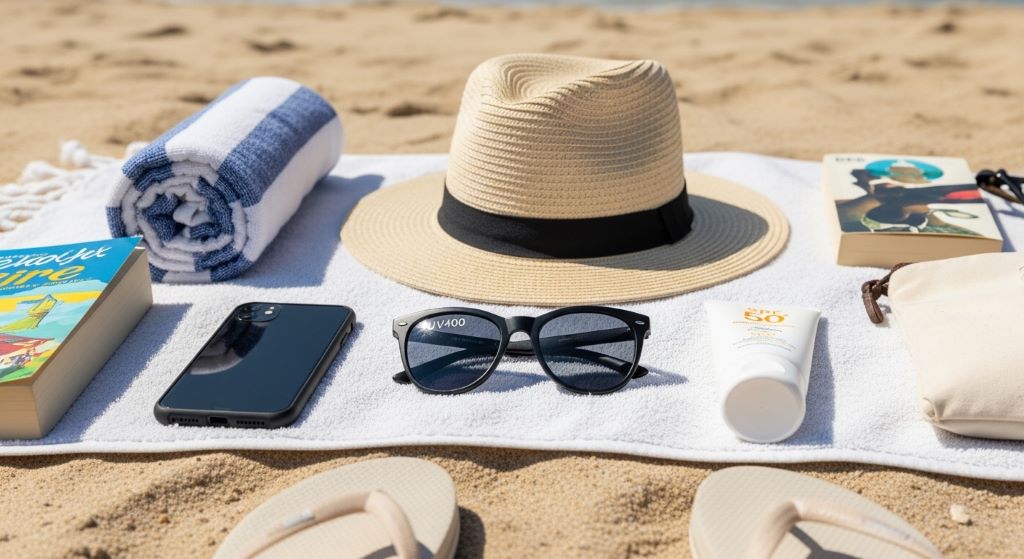
Sunglasses are a key piece of sun protection gear, but they work best as part of a complete approach to UV defense. Pair your sunglasses with a wide-brimmed hat, reef-safe sunscreen, and UV-protective clothing for all-day coverage.
A wide-brimmed hat reduces the amount of direct sunlight reaching your face, which in turn reduces the strain on your lenses. Together, a good hat and quality sunglasses form a powerful shield against beach sun exposure.
Additionally, consider your lip balm, lightweight long-sleeve shirts, and rash guards if you plan to spend extended time in the water. Building a complete sun defense system is one of the smartest things you can do for long-term skin and eye health.
When assembling your travel fashion essentials for a beach trip, think of sun protection as the foundation. Everything else — your outfit, your accessories, your bag — can be built around that core priority.
Budget Versus Quality: Getting the Balance Right
Quality sunglasses do not always require a luxury price tag. However, extremely cheap sunglasses often lack proper UV protection, use low-quality lenses that distort vision, and break easily.
A reasonable budget for a reliable pair of beach sunglasses starts at around $30 to $50 for entry-level options with UV400 protection. Mid-range sunglasses, priced between $60 and $150, typically offer polarized lenses, better frame materials, and improved fit.
Premium brands above $150 often add features like scratch-resistant coatings, anti-reflective treatments, and superior optical clarity. These are worth considering if you spend a lot of time outdoors or want a pair that will last for many years.
Whatever your budget, always prioritize UV protection above style. A fashionable pair of sunglasses with no UV rating is a poor trade for your long-term eye health.
Caring for Your Beach Sunglasses
Good sunglasses deserve good care. Rinse them with fresh water after exposure to salt water to prevent corrosion and mineral buildup. Clean the lenses with a microfiber cloth, not your shirt, which can cause micro-scratches over time.
Store your sunglasses in a hard case when you are not wearing them. Leaving them loose in a bag with keys and other sharp objects is a quick way to scratch the lenses. Additionally, avoid leaving them on hot surfaces like car dashboards or towels in direct sun, as extreme heat can warp frames and damage lens coatings.
Conclusion
Choosing the right sunglasses for beach travel in 2026 comes down to a few key priorities. UV400 protection is essential and should never be compromised. Polarized lenses reduce glare and improve comfort during long days near the water. Frame materials like nylon and TR-90 handle beach conditions better than most alternatives.
Size, fit, and face shape all play a role in finding a pair that you will actually enjoy wearing. Comfort over long periods matters just as much as protection. Features like hydrophobic coatings, impact-resistant lenses, and rubber grip pads add practical value for active beach goers.
Remember, sunglasses are a core piece of sun protection gear and one of the most important travel fashion essentials you can pack. Invest in a quality pair, take good care of it, and your eyes will thank you for years to come.
Frequently Asked Questions
What UV rating should beach sunglasses have?
Always look for UV400, which blocks 100 percent of UVA and UVB rays. This is the minimum standard for safe outdoor eyewear, especially at the beach.
Are polarized sunglasses worth it for beach trips?
Yes. Polarized lenses significantly reduce glare from water and sand, making them ideal for beach environments. They reduce eye strain and improve visual clarity throughout the day.
What lens color is best for beach use?
Gray lenses are the top choice for beach conditions because they reduce brightness without altering natural color perception. Brown and amber lenses are also excellent for enhancing contrast.
How do I keep sunglasses from sliding off at the beach?
Choose frames with rubber nose pads and temple grips. You can also use a sunglass strap for added security during swimming or active sports. A proper-fitting frame will also stay in place better than an ill-fitting one.
Can I wear regular fashion sunglasses at the beach?
You can, but only if they have certified UV400 protection. Many fashion sunglasses lack adequate UV rating. Always check the label before assuming a stylish pair offers real eye protection.
Related Topics:
How to Find the Best Gifts for Campers Who Love Traveling
How to Choose Comfortable Holiday Accommodation in the USA: The Ultimate Guide for 2026