
Overlanding, the self-reliant adventure of traveling long distances through remote terrains, has surged in popularity as adventurers seek to explore off-grid destinations. However, staying connected in areas devoid of cellular or traditional internet infrastructure has historically been a challenge. Enter Starlink, a satellite internet constellation developed by SpaceX, which has revolutionized connectivity for overlanders. The portable Starlink Mini, introduced in 2024, is a compact, backpack-friendly solution designed to deliver high-speed, low-latency internet in the most isolated corners of the globe. This article delves into the history, current state, benefits, challenges, and future trends of using portable Starlink for overlanding, based on 2025 data, while providing practical insights for enthusiasts and seasoned overlanders alike.
History of Starlink and Its Evolution for Overlanding
The Genesis of Starlink
Starlink, launched by SpaceX in 2019, aimed to provide global broadband coverage through a constellation of low Earth orbit (LEO) satellites. Unlike traditional geostationary satellites, which orbit at 35,786 km and suffer from high latency, Starlink’s LEO satellites, positioned at 550–1,200 km, offer significantly lower latency (20–40 ms) and faster speeds. By May 2025, Starlink’s constellation comprises over 7,135 satellites, serving more than 5 million subscribers across 125 countries.
From Residential to Portable Solutions
Initially, Starlink targeted fixed residential and business users in rural areas with its Standard dish, a 21.4-inch phased array antenna requiring a permanent mount. However, the demand for mobile connectivity, particularly among RVers, boaters, and overlanders, prompted SpaceX to introduce the Starlink Roam service in 2022, allowing users to take their internet on the go. The 2024 launch of the Starlink Mini, a compact 63% lighter dish weighing just 2.6 lbs (1.2 kg) with a built-in WiFi router, marked a pivotal moment for overlanding. Priced at $599 with plans starting at $50/month, the Mini’s portability and ease of setup made it a game-changer for remote adventurers.
Milestones in 2024–2025
In 2024, Starlink expanded its Roam plans, introducing the Mini Roam 50GB ($50/month) and Unlimited ($165/month) options, tailored for travelers. By 2025, Starlink’s global traffic grew 3.3x, with significant adoption in remote regions like Malawi and Paraguay, reflecting its appeal for off-grid use. Partnerships with retailers like Best Buy and Officeworks further democratized access, while innovations like solar panel integration hinted at future self-sustaining solutions.
Current State of Portable Starlink for Overlanding
Technical Specifications of Starlink Mini
The Starlink Mini is a marvel of engineering, combining a phased array antenna and WiFi 6 router in a 11.4 x 9.8-inch package. Key specs include:
-
Max Download Speeds: Over 100 Mbps, with real-world tests showing 50–150 Mbps in remote areas.
-
Latency: 20–40 ms, suitable for video calls and streaming.
-
Power Consumption: 25–40W, compatible with USB-C power banks or 12V DC inputs.
-
Durability: IP67 rating for water and dust resistance, operating in temperatures from -22°F to 122°F (-30°C to 50°C).
-
Setup Time: Under 5 minutes, using the Starlink app to locate satellites.
Overlanding-Specific Features
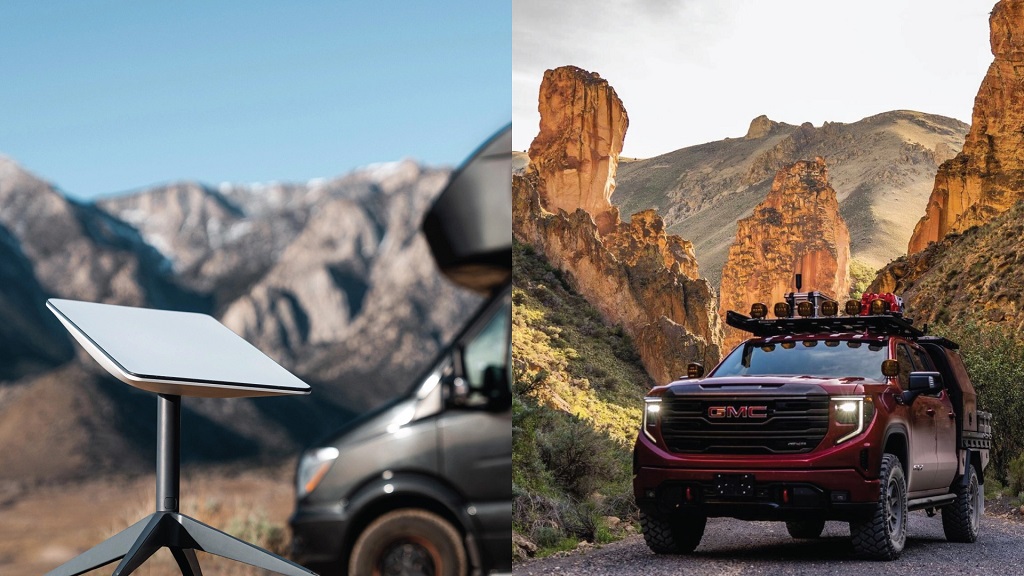
The Mini’s portability is ideal for overlanding, fitting easily in a backpack or vehicle storage. Its ability to connect in motion (up to 100 mph) supports dynamic travel, while the app’s sky-scanning feature ensures optimal dish placement even under partial tree cover. The Roam Unlimited plan offers deprioritized but unlimited data, crucial for extended trips where data caps could disrupt connectivity.
Market Penetration and User Adoption
By May 2025, Starlink reports over 1.6 million U.S. users, with a significant portion adopting Roam plans for mobile lifestyles. Overlanding communities on platforms like X praise the Mini’s reliability, with users like @MarioNawfal highlighting its ability to connect “even under trees”. The service’s expansion into South Asia and Africa underscores its global reach, making it a staple for international overlanders.
Key Concepts for Using Starlink in Overlanding
Understanding LEO Satellite Technology
Starlink’s LEO satellites orbit closer to Earth, reducing signal travel time compared to traditional satellite providers like HughesNet or Viasat, which operate at higher orbits and deliver speeds of 25–50 Mbps with latencies of 600–800 ms. The constellation’s density ensures multiple satellites are always in view, providing seamless coverage even in rugged terrains.
Power Management for Off-Grid Use
Overlanders often rely on vehicle batteries or solar setups. The Mini’s low power draw (25–40W) is compatible with a 100Wh power bank for short sessions or a 200W solar panel for continuous use. SpaceX’s rumored portable solar kits, expected in late 2025, could further simplify off-grid power solutions.
Data Plans and Congestion Management
Starlink’s Roam plans cater to different needs:
-
Mini Roam 50GB: $50/month, ideal for weekend trips with light usage.
-
Roam Unlimited: $165/month, suited for full-time overlanders needing consistent connectivity.
However, network congestion in high-demand areas can throttle speeds, particularly for deprioritized plans. Overlanders must check Starlink’s availability map to avoid sold-out regions.
Benefits of Portable Starlink for Overlanding
Unprecedented Connectivity
Starlink enables overlanders to access high-speed internet in areas where cellular networks fail, such as deep in the Alaskan wilderness or Australia’s Outback. This connectivity supports navigation, real-time weather updates, and remote work, transforming overlanding into a viable lifestyle for digital nomads.
Enhanced Safety and Communication
In emergencies, Starlink provides a lifeline for contacting rescue services or sharing GPS coordinates. For example, the Hoh Tribe in Washington reported Starlink’s role in improving access to healthcare, a benefit equally applicable to overlanders in distress.
Flexibility and Ease of Use
The Mini’s plug-and-play setup, requiring only a clear view of the sky, eliminates the need for complex installations. The ability to pause service during off-seasons adds financial flexibility, a feature praised by part-time RVers and overlanders.
Comparison Table: Starlink Mini vs. Traditional Satellite Internet
|
Feature |
Starlink Mini |
HughesNet |
Viasat |
|---|---|---|---|
|
Max Download Speed |
100–150 Mbps |
25 Mbps |
50 Mbps |
|
Latency |
20–40 ms |
600–800 ms |
600–700 ms |
|
Portability |
Backpack-sized, 2.6 lbs |
Fixed, 10 lbs |
Fixed, 12 lbs |
|
Monthly Cost |
$50–$165 | $69.99–$149.99 | $99.99–$199.99 |
|
Setup Time |
5 minutes |
Professional installation |
Professional installation |
|
Data Cap |
Unlimited (deprioritized) or 50GB |
15–50GB |
40–150GB |
This table highlights Starlink’s superiority in speed, latency, and portability, making it the preferred choice for overlanding.
Challenges of Using Portable Starlink for Overlanding
Environmental Obstructions
A clear line of sight to the sky is critical for Starlink’s performance. Dense tree canopies or canyon walls can interrupt signals, causing dropped connections. Overlanders report minor disruptions during streaming but note that critical tasks like navigation remain functional.
Power Dependency
While the Mini’s power consumption is low, extended off-grid trips require robust power solutions. Overlanders without solar panels or high-capacity batteries may struggle to maintain continuous connectivity, especially in cloudy conditions.
Cost Considerations
The upfront cost of $599 for the Mini, plus $50–$165/month for service, is a significant investment compared to cellular hotspots. For budget-conscious overlanders, the 50GB plan may suffice, but heavy users may find the Unlimited plan’s cost prohibitive.
Network Congestion and Regulatory Hurdles
In high-traffic areas, Starlink imposes a $100 congestion charge, and speeds may slow during peak hours. Additionally, regulatory barriers in countries like South Africa and India limit availability, posing challenges for international overlanders.
Future Trends in Portable Starlink for Overlanding
Advancements in Hardware
SpaceX is developing a third-generation (Gen 3) satellite with 1 Tbps downlink capacity, expected to dominate the constellation by 2027. These satellites will enhance speeds and reduce congestion, benefiting overlanders in crowded regions. Rumors of a Starlink Mini 2.0 with integrated solar cells and a smaller footprint suggest further portability improvements.
Direct-to-Cell Integration
Starlink’s Direct-to-Cell service, set to expand voice and data capabilities in 2025, will allow overlanders to connect smartphones directly to satellites without a dish. This could complement the Mini, offering a backup for ultra-remote areas.
Global Expansion and Competition
Starlink’s partnerships with telecoms in India and Bangladesh signal broader accessibility, but competition from Amazon’s Project Kuiper and Eutelsat’s OneWeb may drive prices down and spur innovation. Overlanders can expect more affordable plans and enhanced services by 2026.
Sustainability and Space Safety
With plans for up to 42,000 satellites, Starlink faces scrutiny for orbital congestion and light pollution. SpaceX’s commitment to sustainable practices, including low-altitude orbits and active de-orbiting, aims to mitigate these concerns, ensuring long-term viability for overlanding applications.
Review of Portable Starlink for Overlanding
Performance and Reliability
The Starlink Mini delivers on its promise of high-speed internet in remote areas, with users reporting consistent 50–100 Mbps speeds in deserts, mountains, and forests. Its low latency supports Zoom calls and gaming, though occasional slowdowns occur during peak hours or under heavy cloud cover. Compared to competitors, Starlink’s performance is unmatched, earning it 4.1/5 stars from Forbes Home.
Ease of Use
Setup is intuitive, with the Starlink app guiding users to optimal dish placement. The Mini’s compact design and included mount simplify transport, though some overlanders recommend a third-party tripod for uneven terrain. The lack of a public customer service number is a drawback, but app-based support is responsive.
Value for Money
At $599 upfront and $50–$165/month, the Mini is a premium product, but its benefits—reliable connectivity, unlimited data options, and no contracts—justify the cost for serious overlanders. The 30-day trial mitigates risk, making it a worthwhile investment for those prioritizing connectivity.
Overall Rating: 4.5/5
The Starlink Mini is a transformative tool for overlanding, offering unparalleled connectivity with minor caveats in cost and environmental sensitivity. Its portability, speed, and flexibility make it a must-have for adventurers in 2025.
Where to Buy Portable Starlink
-
Starlink Official Website (www.starlink.com): The primary source for the Starlink Mini, offering direct purchase for $599 plus shipping ($20–$34). Check availability to avoid congestion-related delays. Promotions, like a $349 discounted kit in select areas, may apply.
-
Best Buy: Sells the Mini for $599 with free in-store pickup or shipping. Ideal for U.S. buyers seeking convenience.
-
Officeworks (Australia): Stocks the Mini for AUD $599 with click-and-collect options, catering to overlanders in Oceania.
-
JB Hi-Fi (Australia): Offers the Mini at AUD $599, often with free metro delivery, suitable for international buyers.
-
Kogan (Australia): Provides competitive pricing and occasional discounts, with delivery options for remote areas.
Always verify regional availability on Starlink’s website, as some areas are sold out or require a congestion charge. Third-party retailers may not offer the 30-day trial, so direct purchase is recommended for first-time users.
Read More Also: How Far Did Sweet Potatoes Travel to Texas: A Deep Dive into Their Historical and Agricultural Journey
5 FAQs About Portable Starlink for Overlanding
1. Can the Starlink Mini work in motion during overlanding?
Yes, it supports in-motion use up to 100 mph (160 km/h), making it ideal for vehicles. Ensure the dish is securely mounted with a clear sky view.
2. How does weather affect Starlink Mini’s performance?
Heavy rain or snow may cause brief disruptions, but the Mini’s IP67 rating ensures durability. Clear skies yield optimal performance.
3. What power sources are best for off-grid use?
A 100Wh USB-C power bank supports short sessions, while a 200W solar panel or 12V vehicle battery is ideal for extended trips.
4. Is the 50GB Roam plan sufficient for overlanding?
It suits light users (e.g., navigation, emails), but heavy streamers or remote workers should opt for the Unlimited plan to avoid data caps.
5. Can I use Starlink Mini internationally?
Yes, with the Roam Unlimited plan, it works in 125 countries, but check local regulations, as some regions (e.g., Russia, China) are unsupported.
Read More Also: Starlink Mini for RV Camping Internet: A Comprehensive Guide for 2025
Conclusion
Portable Starlink, particularly the Mini, has redefined overlanding by providing high-speed, low-latency internet in the most remote areas. Its evolution from a fixed residential service to a compact, overlanding-friendly solution reflects SpaceX’s commitment to global connectivity. While challenges like cost and environmental obstructions persist, the benefits—safety, flexibility, and unprecedented access—outweigh the drawbacks for dedicated adventurers. As Starlink expands its constellation and introduces innovations like Direct-to-Cell and solar-integrated kits, overlanders can expect even greater reliability and affordability by 2027. Whether you’re navigating the Sahara or camping in Patagonia, the Starlink Mini is a transformative tool, available now at retailers like Starlink’s website, Best Buy, and Officeworks. Embrace the freedom of overlanding without sacrificing connectivity.