
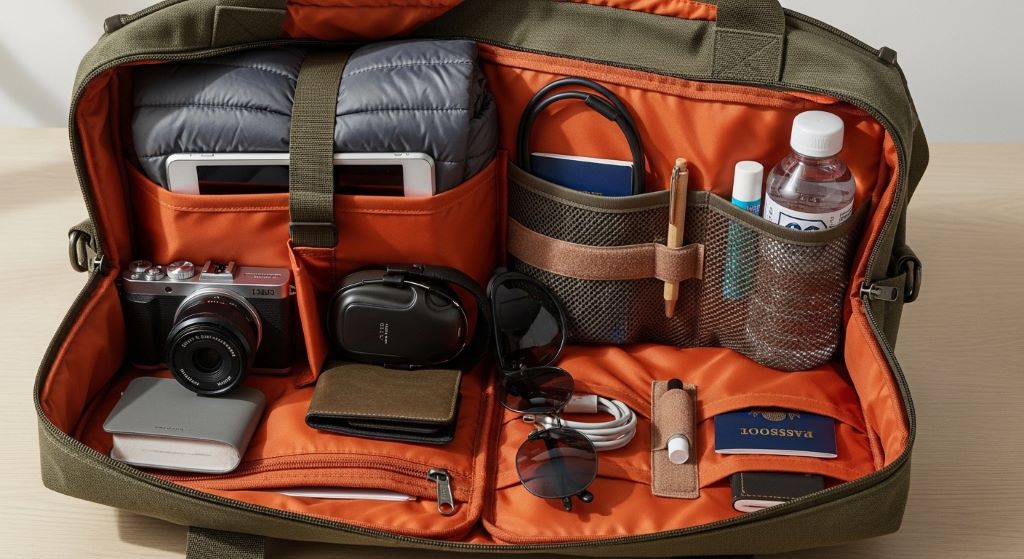
Traveling with a well-organized tote bag can transform your journey from stressful to seamless. Whether you’re heading to the airport, embarking on a road trip, or catching a train, having everything you need within easy reach makes all the difference. A cluttered bag leads to frustration, wasted time, and unnecessary stress during your travels.
The secret to efficient travel lies not just in what you pack, but in how you organize it. Professional travelers and frequent flyers have mastered the art of keeping their belongings accessible, protected, and neatly arranged. This guide will show you exactly how to achieve that same level of organization in your own travel tote.
By implementing smart packing hacks and effective bag organization techniques, you’ll spend less time digging through your bag and more time enjoying your journey. Let’s explore the strategies that will elevate your travel game.
Choosing the Right Travel Tote
Before diving into organization strategies, selecting an appropriate tote bag sets the foundation for success. Not all totes are created equal when it comes to travel functionality.
Look for a bag with multiple compartments built in. These divisions create natural spaces for different categories of items. A good travel tote should have at least one main compartment, several interior pockets, and one or two exterior pockets for quick-access items.
Consider the size carefully. Your tote should fit comfortably under the seat in front of you on a plane while holding everything you need during your journey. Too large, and it becomes cumbersome. Too small, and you’ll struggle to fit your essentials.
Material matters significantly for travel purposes. Water-resistant fabrics protect your belongings from unexpected spills or weather. Additionally, durable materials withstand the rigors of frequent travel better than delicate fabrics.
Creating Zones Within Your Tote
The foundation of professional-level organization involves dividing your tote into specific zones. Each zone serves a distinct purpose, making items easy to locate and access.
Designate one area for electronics and their accessories. This might be a padded sleeve or a specific pocket. Keeping cables, chargers, headphones, and devices together prevents tangling and makes security checkpoints much smoother.
Create a documents zone for your passport, boarding passes, tickets, and important papers. A zippered pocket works best for these items since you need them to stay secure but accessible. Some travelers use a small folder or envelope within their tote specifically for documentation.
Establish a personal care section for items like hand sanitizer, lip balm, tissues, and face wipes. These frequently used items should live in an easily reachable pocket. Group them together so you’re not searching through multiple compartments.
Set aside space for snacks and beverages. Keep food separate from electronics and documents to prevent spills from causing disasters. An insulated pocket helps keep drinks from sweating onto your other belongings.
Using Pouches and Organizers Effectively
Small organizing tools transform a simple tote into a highly functional travel companion. These accessories create structure within your bag’s larger compartments.
Packing cubes work wonderfully inside totes, not just in suitcases. Use a small cube for clothing items like a change of clothes or a sweater. The cube compresses items and prevents them from shifting around or getting wrinkled.
Zippered mesh pouches let you see contents at a glance. Use these for toiletries, makeup, or first-aid supplies. The transparency eliminates guessing games when you need something quickly.
Cable organizers prevent the tangled mess that happens when cords roam freely in your bag. Small elastic wraps, cable cases, or even a simple zip-top bag keeps charging cables under control.
A pill organizer or small container works perfectly for jewelry, earbuds, or tiny items that otherwise disappear into the depths of your tote. These prevent small valuables from getting lost or damaged.
Maximizing Vertical Space
Most people pack their totes horizontally, layering items on top of each other. However, packing vertically often proves more efficient and accessible.
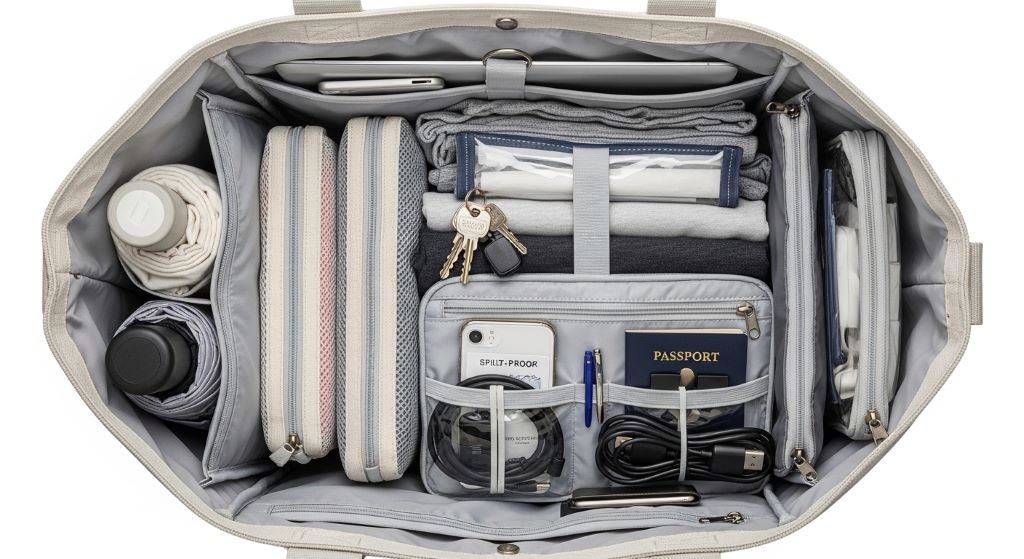
Stand items upright when possible rather than stacking them flat. This technique, borrowed from closet organization experts, lets you see everything at once when you open your bag. Water bottles, pouches, and rolled clothing items all benefit from vertical arrangement.
Use the full height of your tote by placing taller items along the sides and shorter items in the middle. This creates a valley effect that makes everything visible and prevents items from hiding beneath others.
Roll soft items like scarves, light jackets, or small blankets into cylinders. These rolls fit into gaps and odd spaces that flat-packed items waste. Additionally, rolling prevents wrinkles better than folding.
Implementing the Layer Strategy
Strategic layering ensures you can access what you need without unpacking everything. Think about when you’ll need each item during your journey.
Place items needed during transit at the top or in outer pockets. This includes your book, tablet, headphones, or snacks. You should be able to grab these without disturbing the rest of your bag’s contents.
Mid-layer items are things you might need but not immediately. A light sweater, extra socks, or your toiletry pouch typically fit this category. These items sit in the main compartment but remain relatively accessible.
Bottom layer items are your backup supplies or things needed only at your destination. A change of clothes, extra shoes, or emergency supplies can settle at the bottom since you won’t need them during your journey.
Keeping Liquids Under Control
Liquids present unique challenges in travel totes. Preventing leaks and spills protects your other belongings and saves considerable frustration.
Use the bag-within-a-bag method for all liquids. Place bottles and containers inside a waterproof toiletry bag or a sealed zip-top bag. This containment strategy ensures that if something leaks, it won’t ruin your electronics or documents.
Store liquids upright whenever possible. The standing position reduces pressure on caps and closures. If your tote has a pocket on the side, this often works perfectly for a water bottle.
Consider travel-sized containers even for short trips. Smaller bottles mean less potential liquid if something does leak. Moreover, they take up less space and weigh less than full-sized products.
Double-check that all caps are tightly closed before placing bottles in your bag. Give each one an extra twist to ensure security. Some travelers also place plastic wrap over bottle openings before screwing caps back on for added leak protection.
Managing Cords and Technology
Electronics and their accessories can quickly create chaos in your tote. Implementing smart packing hacks specifically for technology keeps everything functional and accessible.
Wind each cable individually before placing it in your organizer. Loose cables tangle with each other and create frustrating knots. Some people use the over-under wrapping method borrowed from professional audio technicians.
Keep chargers with their corresponding devices. Use rubber bands or small clips to attach cables to their devices. This pairing prevents the common scenario of having a device but no charger or vice versa.
Protect screens and devices from scratches by placing them in dedicated sleeves or against soft items like clothing. Never let a tablet or laptop knock directly against hard objects like water bottles or cosmetic cases.
Label your cables if you carry multiple similar-looking ones. A small piece of tape or a label maker helps you identify which cable goes with which device. This saves time and prevents you from trying the wrong charger repeatedly.
Utilizing External Attachment Points
Many totes feature loops, carabiners, or D-rings on the outside. These attachment points serve important organizational functions that many travelers overlook.
Clip frequently needed items to external loops for instant access. A hand sanitizer bottle with a carabiner clip, a small flashlight, or a luggage tag with emergency contact information all work well for external attachment.
Attach a separate small pouch to the outside for items you need constantly. Some travelers use this for their phone, boarding pass, and ID during airport navigation. This eliminates opening the main bag repeatedly.
Hook a water bottle holder to the side if your tote lacks an interior bottle pocket. This frees up internal space while keeping your drink accessible and upright.
However, avoid overloading external attachments. Too many dangling items create a cluttered appearance and increase the risk of snagging or losing things during transit.
Maintaining Organization During Your Trip
Creating the perfect organization system means nothing if it falls apart after the first use. Maintaining order throughout your journey requires minimal effort with the right habits.
Return items to their designated zones immediately after use. This simple habit prevents the gradual descent into chaos that happens when you start tossing things randomly back into your bag.
Do a quick reorganization during longer journeys. If you have a layover or rest stop, take two minutes to tidy your tote. This reset keeps everything in its proper place and prevents small messes from becoming big problems.
Remove trash and empty wrappers regularly. A clean bag stays organized more easily than one filled with debris. Most airports and rest areas have trash bins specifically for this purpose.
Adjust your system as needed based on what works and what doesn’t. If you find yourself constantly reaching past other items to get something, move it to a more accessible location. Your organization should evolve to serve your specific needs.
Planning for Quick Security Checks
Airport security can turn into a stressful scramble if your tote isn’t organized for easy access. Professional travelers optimize their bag organization specifically with security checkpoints in mind.
Keep your liquids bag at the top of your tote. You’ll need to remove it for screening, so having it immediately accessible speeds up the process. Some travelers place it in an outer pocket for even faster retrieval.
Store electronics in a way that allows quick removal. If you need to take out a laptop or tablet, having it in a sleeve near the top of your bag makes this process smooth. Fumbling through layers wastes time and creates stress.
Wear or pack items with metal in easily accessible places. If you need to remove jewelry, belts, or jackets, having a designated spot ready for these items helps you move through security efficiently.
Conclusion
Organizing your travel tote like a professional transforms your entire travel experience. By implementing smart packing hacks and strategic bag organization, you create a system that keeps everything accessible, protected, and orderly throughout your journey. The key lies in creating designated zones, using organizing tools effectively, and maintaining your system as you travel.
Start by choosing a tote with multiple compartments that suit your needs. Divide the space into zones for different item categories, and use pouches and organizers to create structure within larger compartments. Remember to pack vertically when possible, layer items strategically based on when you’ll need them, and protect liquids carefully.
Additionally, don’t overlook the importance of managing your technology and cables, utilizing external attachment points wisely, and optimizing your organization for security checkpoints. These details make the difference between a frustrating travel experience and a smooth, enjoyable journey.
With these strategies in place, you’ll spend less time searching through your bag and more time relaxing during your travels. The small effort invested in organizing your tote pays dividends in convenience, efficiency, and peace of mind every time you travel.
Frequently Asked Questions
How many pouches should I use in my travel tote?
The ideal number varies based on your needs, but most travelers find that three to five pouches work well. Use one for electronics and cables, one for toiletries and personal care items, one for documents and important papers, and possibly one for snacks or miscellaneous items. Avoid using too many pouches, as this creates unnecessary complexity and makes finding items more difficult.
What should I keep in my tote’s outer pockets?
Outer pockets should contain items you need frequently and quickly. This includes your phone, boarding pass, ID, pen, hand sanitizer, tissues, and lip balm. Some travelers also keep a small snack or gum in outer pockets for easy access. Reserve these spots for items you’ll use multiple times during your journey rather than things you only need at your destination.
How can I prevent my water bottle from leaking in my tote?
Choose a water bottle with a secure, leak-proof cap and always ensure it’s completely closed before placing it in your bag. Store the bottle upright in a side pocket or dedicated bottle holder if your tote has one. Additionally, consider using an insulated bottle sleeve that catches condensation and provides extra leak protection. Some travelers place their water bottle inside a small zip-top bag for double protection.
Should I organize my tote differently for different types of trips?
Yes, your organization strategy should adapt to your trip type. For flights, prioritize easy security checkpoint access and in-flight entertainment items. Road trips allow for more flexibility and potentially larger items. Day trips require different organization than overnight journeys. However, the basic principles of zoning, using organizers, and strategic layering remain constant across all trip types.
How often should I clean out and reorganize my travel tote?
After each trip, remove all items from your tote and assess what you actually used. This helps you refine your packing list for future travels. Clean the interior, check for any needed repairs, and restock frequently used items like tissues or hand sanitizer. Many experienced travelers do this organization reset within 24 hours of returning home while the trip is still fresh in their minds.
Related Topics:
Royal Caribbean Maintenance Cancels Alesund Visit: What Cruisers Need to Know
Tips to Keep Your RV Warm in Winter: A Complete Guide for Cozy Cold-Weather Camping