

Have you ever wondered why distant sounds—like a train’s whistle, a dog barking, or a faraway conversation—seem sharper and clearer during summer evenings compared to chilly winter mornings? You’re not imagining things. The reason lies in the physics of how sound travels through air, and temperature plays a crucial role. In fact, sound travels significantly faster in summer than in winter due to the properties of air and how it responds to heat.
In this article, we’ll break down the science behind why sound travels faster in summer than in winter, explain the concept using real-world analogies, and explore how this affects our daily lives. Whether you’re a student, a curious mind, or someone preparing for a competitive exam, you’ll find this breakdown useful and easy to digest.
Understanding the Basics: What Is Sound?
Sound is a mechanical wave that travels through a medium—such as air, water, or solids—by vibrating the particles in that medium. These vibrations create compressions and rarefactions that our ears perceive as sound.
But here’s the key: sound needs a medium to travel, and how fast it moves through that medium depends on several factors, including:
- Temperature
- Density
- Elasticity of the medium
Let’s focus on air, since that’s the medium we typically experience sound in during everyday life.
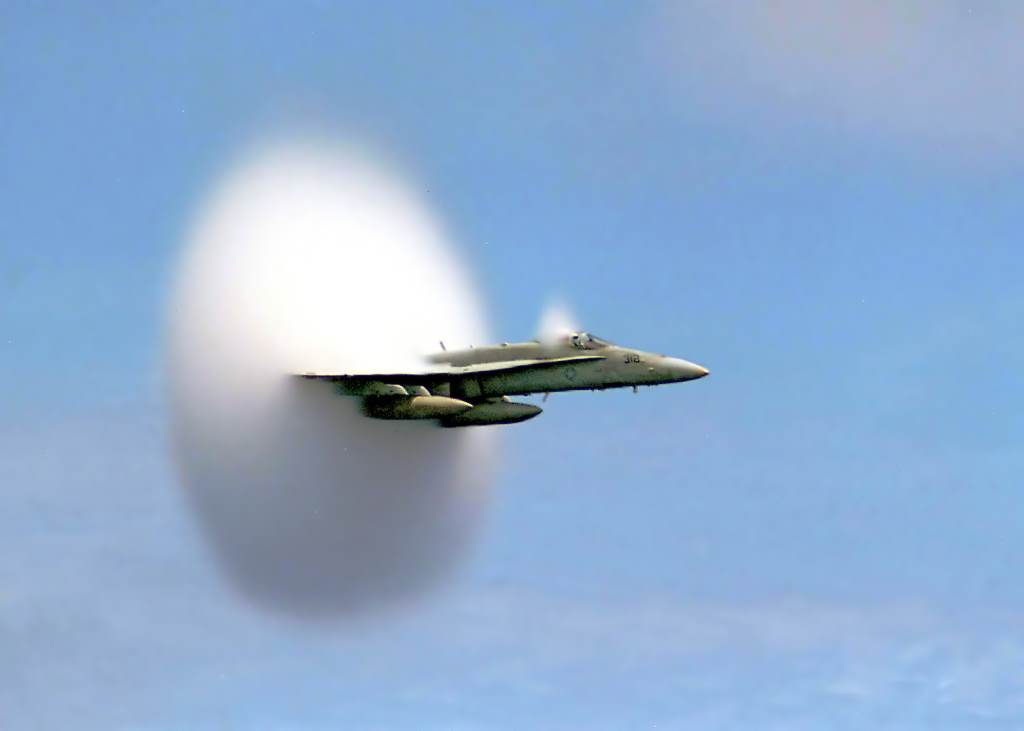
The Role of Temperature in Sound Propagation
One of the most influential factors affecting the speed of sound in air is temperature. Warmer air causes the molecules to move faster, increasing the energy and reducing the time it takes for sound waves to be transmitted from one particle to another.
Scientific Explanation:
The speed of sound in dry air at 0°C (32°F) is approximately 331 meters per second (m/s). With every degree Celsius increase in temperature, the speed of sound increases by about 0.6 m/s.
So, at 20°C (68°F)—a typical summer temperature—the speed of sound is:
Speed = 331 + (0.6 × 20) = 343 m/s
In contrast, in winter, when the temperature might drop to 0°C or lower, sound travels slower—at around 331 m/s or less.
Key takeaway: The warmer the air, the faster sound can travel through it.
Why Does This Happen? A Deeper Dive into the Physics
Air is composed of gas molecules. When sound waves move through the air, they rely on these molecules to transmit energy. In warmer temperatures:
- Molecules have more kinetic energy.
- They vibrate and collide more rapidly.
- This allows faster transmission of sound waves from one particle to the next.
In colder temperatures:
- Molecules are slower and more sluggish.
- Sound waves encounter greater resistance.
- As a result, sound moves slower.
This principle is rooted in Newton–Laplace equation for the speed of sound:
v = √(γ × R × T / M)
Where:
- v = speed of sound
- γ = adiabatic index
- R = universal gas constant
- T = absolute temperature (in Kelvin)
- M = molar mass of the gas
As you can see, temperature (T) directly influences the speed.
Real-World Examples: Hearing Differences in Summer vs. Winter
1. Train Whistles or Church Bells
You might notice that the whistle of a train or the ringing of a church bell travels farther and clearer in summer. This happens because sound waves reach your ears more quickly and with less distortion.
2. Outdoor Sports Events
At a summer stadium, the cheers and announcements seem crisper. In contrast, during colder months, the same sounds can feel muted or distant.
3. Wildlife Sounds
Birds chirping in the early summer morning seem louder than in winter. Part of this is due to increased insect activity and birdsong, but physics also plays a role.
Read Also:
Why Is Italy a Good Place to Visit?
UK Off‑Peak Travel: Cheat‑Sheet for Savings And Quiet
Temperature Inversions: When Winter Sound Travels Farther
Interestingly, there are exceptions where sound seems to travel farther in winter under special conditions—like during a temperature inversion.
What is a Temperature Inversion?
Normally, air gets colder as altitude increases. But during a temperature inversion, a layer of warmer air traps colder air below, creating a “lid” over the lower atmosphere. This can cause sound waves to bend back toward the ground rather than dispersing upward.
Result? Sound can travel farther than usual in winter under these conditions, but it’s the inversion—not the general temperature—that causes this.
So, while speed is generally slower in cold air, the direction and reflection of sound waves can allow them to travel farther under specific atmospheric circumstances.
Implications in Various Fields
Understanding how temperature affects sound isn’t just an academic curiosity. It has practical implications in many industries and situations.
1. Military and Surveillance
Sound detection systems and sonar devices must account for atmospheric conditions when estimating distances or detecting movement.
2. Environmental Science
Meteorologists use sound waves to measure wind speed, temperature changes, and other phenomena, which are crucial for accurate forecasting.
3. Aviation and Aerospace
Air traffic controllers and pilots rely on clear sound transmission, especially during takeoff and landing. Warm air conditions impact how sound signals are sent and received.
4. Architecture and Acoustics
Designing concert halls or public spaces involves understanding how sound behaves in varying temperatures and air conditions.
Myth-Busting: Is Louder Always Faster?
Some may assume that if a sound is louder, it must be traveling faster. This is not true. Loudness is determined by amplitude, while speed is related to medium properties like temperature, pressure, and density.
So, a quiet voice in warm air can still reach faster than a loud voice in freezing air.
Final Summary: Why Does Sound Travel Faster in Summer?
To wrap up:
- Sound travels faster in summer because warm air molecules move faster, allowing sound waves to transmit more quickly.
- Cold air slows down sound due to reduced molecular motion.
- While temperature inversions can cause exceptions, in general, warmer temperatures lead to faster sound speeds.
- Understanding this principle has real-world applications—from engineering and meteorology to everyday life.
Explore the Science Around You!
The next time you’re outside on a warm summer evening, listen closely. The clarity of the sounds around you isn’t just soothing—it’s science in action.
If you found this article helpful, consider sharing it with others who enjoy learning about the fascinating ways science impacts our daily experiences. For more engaging science explainers, subscribe to our blog or leave a comment below with your own sound-related observations. Let’s explore the world through sound, one season at a time.