
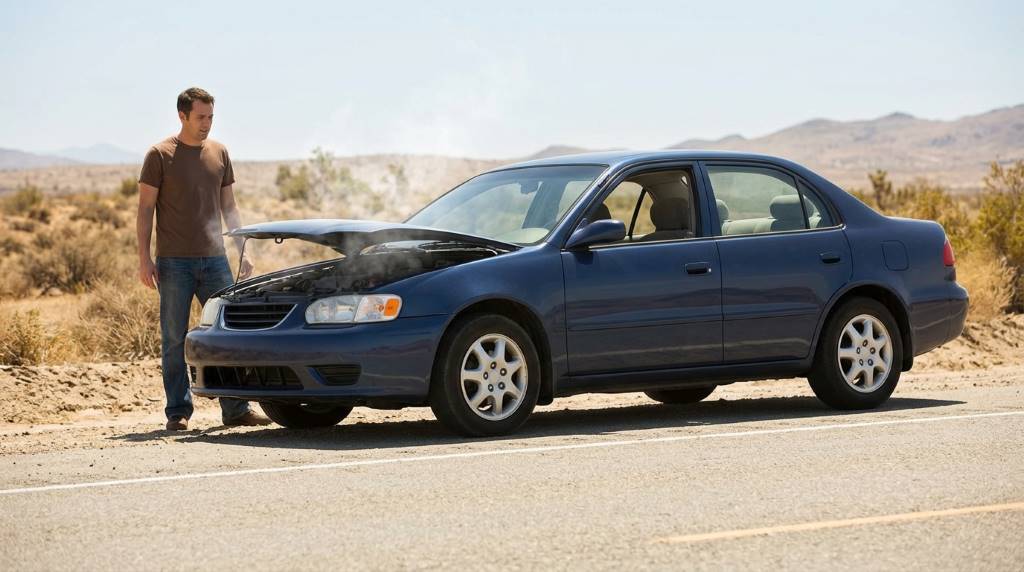
If your sedan overheats during a road trip, pull over safely, shut down the engine, and let it cool. Then check coolant, leaks, airflow, belts, and the radiator before driving again. A normal engine coolant temperature often sits near 195°F to 220°F. Water reaches 212°F at sea level, showing why excessive heat quickly becomes dangerous.
Stop the Overheating Before Diagnosing Anything
When the temperature gauge rises sharply, treat the warning as an immediate mechanical problem. Continuing uphill or maintaining highway speed can turn manageable overheating into severe engine damage.
First, reduce the air conditioner load and switch on the cabin heater. Then find a safe shoulder, parking area, or rest stop away from moving traffic.
After stopping, keep the engine running briefly if the temperature remains below the red zone. This approach can help circulate coolant while airflow continues through the radiator.
However, shut the engine off immediately when the gauge reaches the red zone. Also stop when you see steam, smell burning coolant, or hear unusual knocking.
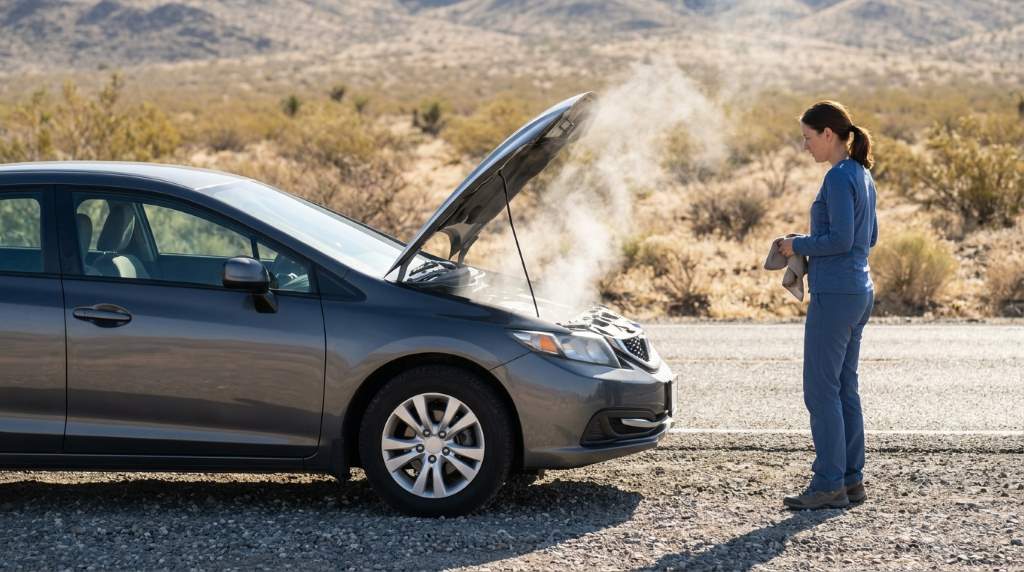
Never remove the radiator cap while the engine remains hot. Pressurized coolant can erupt and cause serious burns within seconds.
Instead, wait at least 30 minutes before inspecting the cooling system. Longer cooling time may become necessary after severe overheating or prolonged highway driving.
Use the Dashboard as Your First Diagnostic Tool
Your temperature gauge provides the fastest clue about how quickly the engine temperature changes. A sudden rise usually deserves more attention than a gradual increase.
Also watch warning lights, engine power, cabin heat, and unusual sounds. Together, these signals can reveal whether coolant circulation or airflow has failed.
If the cabin heater suddenly blows cold air, suspect low coolant or poor coolant circulation. That symptom deserves caution because the engine may lack sufficient coolant flow.
Check Coolant, Leaks, and Reservoir Level
Once the engine becomes safe to approach, inspect the coolant reservoir first. Compare its level with the cold and hot markings printed on the container.
If the reservoir looks empty, inspect underneath the sedan for fresh coolant. Look around hoses, radiator connections, the water pump area, and the thermostat housing.
Also examine the ground for colored fluid or a sweet chemical smell. Coolant colors vary, so never identify coolant solely by appearance.
If you need a temporary roadside check, use the correct premixed coolant specified for your vehicle. Do not mix incompatible coolant technologies simply because their colors appear similar.
Distilled water can provide a short emergency top-up when proper coolant remains unavailable. However, restore the correct coolant mixture as soon as possible.
For additional vehicle planning, even unrelated travel preparation can benefit from how to get into Caribe route checks.
Never pour cold water directly onto a hot engine or radiator. Rapid temperature changes can stress components and create additional mechanical problems.
Inspect the Reservoir Carefully
A low reservoir level usually indicates coolant loss, trapped air, or another cooling-system problem. Therefore, topping up the reservoir alone may not solve the underlying failure.
Check the reservoir again after the engine cools completely. A rapidly falling level strongly suggests an active leak that requires professional attention.
Look for External Coolant Leaks
Inspect rubber hoses for splits, swelling, soft spots, and loose clamps. Next, examine radiator seams and connections for wetness or dried coolant residue.
Check around the water pump when accessible without touching hot components. A failing pump can leak coolant while also reducing circulation through the engine.
If coolant leaks heavily, do not attempt a long-distance drive. Arrange roadside assistance or professional towing instead.
Restore Airflow Through the Radiator
A sedan needs steady airflow to release engine heat, especially during long climbs and slow traffic. Consequently, blocked radiator fins can create overheating even when coolant levels look normal.
Inspect the radiator area for leaves, plastic bags, insects, mud, and road debris. Remove loose debris carefully without bending delicate radiator fins.
Also inspect the grille for blockage after driving through construction areas or dusty roads. Restricted airflow forces the cooling system to work harder under sustained engine load.
If your route includes remote coastal areas, planning stops near best secluded beaches can reduce roadside stress.
Check the Electric Cooling Fan
Most modern sedans use electric cooling fans controlled by temperature sensors and electronic modules. These fans should activate when coolant temperature reaches the required operating threshold.
After the engine cools, inspect the fan visually for damage or obstruction. Do not place your hands near the fan because it can start unexpectedly.
A fan that never activates can cause overheating during traffic, idling, or slow climbs. Highway airflow may temporarily hide the problem until congestion appears.
Understand Why Highway Heat Can Surprise You
Highway driving normally creates substantial airflow, but engine load can still overwhelm a weakened cooling system. Long grades, heavy luggage, towing, and high temperatures increase heat production.
Therefore, overheating during a road trip often exposes an existing weakness rather than creating one. A partially blocked radiator or aging water pump may fail under sustained demand.
Check the Belt, Thermostat, and Water Pump
Cooling systems depend on several components working together continuously. A failure in one component can quickly disrupt coolant temperature control.
Inspect the serpentine belt after the engine cools. Look for severe cracking, fraying, missing sections, glazing, or complete belt failure.
A damaged belt can affect accessories and, on some engines, the water pump. However, never assume belt failure without checking your specific engine design.
The thermostat controls coolant flow as the engine reaches operating temperature. A thermostat stuck closed can prevent adequate circulation and cause rapid overheating.
The water pump moves coolant throughout the cooling system. Internal impeller damage can reduce circulation without producing an obvious external leak.
Because these failures require deeper diagnosis, avoid replacing parts based only on symptoms. A qualified technician can pressure-test the system and verify circulation properly.
When a Thermostat Failure Makes Sense
A stuck thermostat can cause overheating shortly after driving begins. The upper radiator hose may remain unusually cool while the engine temperature climbs.
However, hose temperature alone cannot confirm thermostat failure. Use proper diagnostic equipment before replacing expensive or difficult-to-access components.
When a Water Pump Failure Becomes Likely
A failing water pump may produce bearing noise, coolant leakage, or weak circulation. Some failures also cause temperature spikes that become worse under increased engine load.
If the pump operates through the timing system, replacement may require substantial labor. Therefore, professional diagnosis becomes especially important before attempting repairs.
Manage Air Conditioning and Driving Load
Your air conditioner adds heat load to the vehicle’s cooling system. During an overheating event, turn it off immediately and reduce engine demand.
If the temperature falls after switching off the air conditioner, continue toward a safe location cautiously. Do not interpret temporary improvement as proof that the problem has disappeared.
Similarly, avoid aggressive acceleration, high engine speeds, and unnecessary climbing. Use moderate throttle inputs and select an appropriate gear for long grades.
Reduce unnecessary cargo when possible because additional weight increases engine workload. Also avoid prolonged idling when the cooling system already struggles.
If you transport pets, secure them properly without blocking cabin ventilation or restricting driver visibility. Guidance about how to restrain your dog in a car illustrates the importance of safe vehicle arrangements.
Know When You Can Drive Again
Restart the sedan only after the temperature returns to a safe range. Then observe the gauge closely while remaining near a safe stopping opportunity.
Drive gently for several minutes and monitor whether the temperature stays stable. Avoid highways if the cooling system still shows unpredictable temperature changes.
Stop again if the gauge climbs toward the red zone. Do not gamble on reaching the next city when the engine continues overheating.
A sedan that overheats repeatedly needs professional diagnosis before completing a long journey. Repeated overheating can damage head gaskets, cylinder heads, pistons, and other expensive components.
A Simple Restart Decision
- Temperature stable: Restart cautiously and monitor the gauge continuously.
- Coolant level low: Refill only after the engine becomes completely safe.
- Visible leak: Avoid driving and arrange professional assistance.
- Steam continues: Keep the engine off and wait for qualified help.
- Gauge rises again: Stop immediately and discontinue the trip.
Use This Roadside Overheating Checklist
A structured checklist prevents panic and helps you identify the most obvious causes quickly. Follow each step without rushing the inspection.
- 1. Pull over: Move away from traffic and choose a safe, stable location.
- 2. Shut down: Turn off the engine when temperature reaches dangerous levels.
- 3. Cool completely: Wait before opening any cooling-system component.
- 4. Inspect coolant: Check reservoir level and search for visible leaks.
- 5. Inspect airflow: Clear safe-to-remove debris from the grille and radiator area.
- 6. Check the belt: Look for obvious damage without touching moving components.
- 7. Restart carefully: Monitor temperature only after the system becomes safe.
- 8. Stop again: Abandon the trip if overheating returns.
Prevent Sedan Overheating Before Your Next Road Trip
Prevention starts several days before departure, not when the temperature gauge rises. A short inspection can expose weaknesses before highway conditions test them.
Check coolant level, tire condition, engine oil, belts, hoses, and visible fluid leaks. Also verify that the radiator area remains free from significant debris.
Inspect coolant condition according to the manufacturer’s recommended maintenance schedule. Old coolant can lose protective properties and contribute to corrosion inside the cooling system.
Ask a technician to test the cooling system when the vehicle shows unexplained temperature fluctuations. Preventive diagnosis costs far less than repairing severe overheating damage.
Prepare for Heat, Hills, and Traffic
Hot weather increases cooling demand, particularly during mountain climbs and congested traffic. Plan breaks that allow both passengers and the vehicle to recover.
Keep emergency water, approved coolant, gloves, a flashlight, and basic roadside supplies in the trunk. These supplies cannot repair major failures, but they improve roadside preparedness.
Before departure, confirm your roadside assistance coverage and keep emergency contact information accessible. Knowing your recovery options reduces pressure when mechanical problems interrupt the journey.
Common Mistakes That Make Overheating Worse
Several common reactions can turn a manageable cooling problem into an expensive repair. Avoid these shortcuts whenever your sedan begins running hot.
- Opening the radiator cap hot: Pressurized coolant can cause severe burns.
- Driving until the next exit: Continued overheating can cause major engine damage.
- Ignoring a low reservoir: Coolant loss usually requires diagnosis, not repeated topping up.
- Using random coolant: Incompatible formulations can create cooling-system problems.
- Pouring cold water over the engine: Sudden temperature changes can stress hot components.
- Trusting the gauge alone: Steam, odors, noises, and cabin heat provide valuable additional clues.
When Professional Repair Becomes Necessary
Some overheating problems require tools, pressure testing, electronic diagnostics, or component replacement. Do not attempt complex repairs beside a busy highway.
Professional assistance becomes necessary when coolant disappears quickly or leaks visibly. It also becomes necessary when overheating returns after topping up coolant.
Seek immediate help when the engine produces white exhaust smoke, severe knocking, or persistent steam. These symptoms may indicate internal engine damage or serious cooling-system failure.
Likewise, tow the vehicle when the radiator fan, water pump, or belt appears defective. A short tow can prevent thousands of dollars in additional engine damage.
FAQs
Can I Drive a Sedan After It Overheats?
Drive only after the engine fully cools and the temperature remains stable during careful testing.
Should I Add Water to an Overheated Engine?
Add water only as an emergency coolant substitute after the engine completely cools.
Why Does My Sedan Overheat on Hills?
Hill climbing increases engine load, exposing weaknesses involving coolant flow, airflow, or radiator capacity.
Can Low Coolant Cause Sudden Overheating?
Yes, low coolant can reduce heat transfer and cause rapid temperature increases.
How Long Should I Wait Before Opening the Radiator?
Wait until the engine and cooling system cool completely before opening the radiator cap.
Final Takeaway
The safest solution starts with stopping early, cooling the engine, and identifying the likely cooling-system problem. Never treat an overheating warning as something you can simply drive through.
Check coolant, leaks, radiator airflow, fans, belts, and temperature behavior before deciding whether driving remains safe. If overheating returns, arrange professional assistance rather than risking permanent engine damage.
Before your next road trip, schedule a cooling-system inspection and carry essential roadside supplies. Taking these steps now can protect your sedan, your passengers, and your travel plans. Save this roadside checklist and inspect your sedan before your next long-distance drive.