
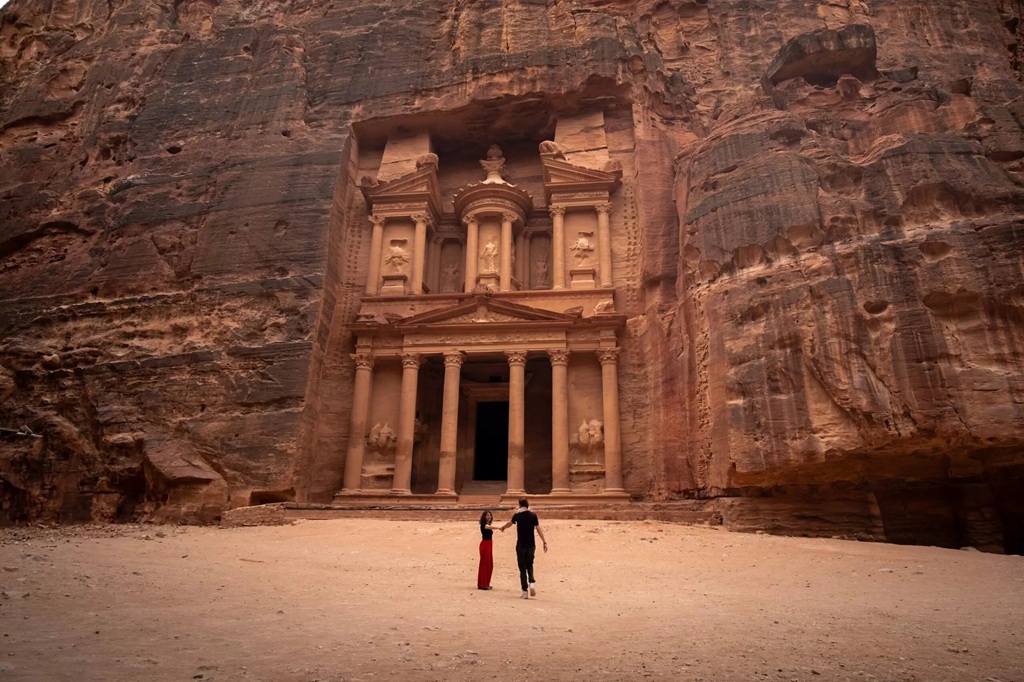
Imagine a city carved directly into soaring rose-red cliffs, hidden from the outside world for centuries. This isn’t a fantasy; it’s Petra, the breathtaking ancient capital of the Nabataean Kingdom, nestled deep within the rugged desert canyons of southern Jordan. Known famously as the “Lost City” and the “Rose-Red City,” Petra remains one of the world’s most awe-inspiring archaeological wonders and a designated UNESCO World Heritage Site since 1985. Its intricate rock-cut architecture, ingenious engineering, and sheer scale draw visitors into a world that feels suspended in time, offering a profound connection to a civilization that mastered life in the harsh desert landscape over two millennia ago.
Unveiling the History of the Rose-Red City
Petra’s story begins long before its famous monuments were carved. The area shows evidence of settlement dating back to the Neolithic period (around 7000 BC). However, it was the Nabataeans, a nomadic Arab people, who transformed the site into a thriving metropolis starting around the 4th century BC. Recognizing the strategic location along ancient caravan routes trading valuable incense, spices, and silks between Arabia, Egypt, Syria, and the Mediterranean, the Nabataeans established Petra as their capital. They grew immensely wealthy, channeling their riches into creating the spectacular rock-cut tombs, temples, and civic buildings that define the city. Petra flourished, particularly in the 1st century AD, reaching an estimated population of 20,000. In 106 AD, the Roman Empire annexed the Nabataean Kingdom, renaming it Arabia Petraea.
Petra continued to thrive under Roman rule for a time, but shifts in trade routes towards the sea and a devastating earthquake in 363 AD gradually led to its decline. By the early Islamic era, the magnificent city was largely abandoned, inhabited only by local Bedouin tribes. It remained largely unknown to the Western world until 1812, when Swiss explorer Johann Ludwig Burckhardt, disguised as an Arab scholar, rediscovered its splendors, unveiling the “Lost City” once more.
The Dramatic Entrance: Journey Through the Siq
The approach to Petra is an experience in itself, setting the stage for the wonders within. Visitors walk through the Siq, a narrow, winding gorge that stretches for about 1.2 kilometers (0.75 miles). Sheer sandstone cliffs, reaching heights of 80 meters (over 260 feet), tower on either side, displaying mesmerizing patterns and hues of red, pink, orange, and yellow sculpted by wind and water over millennia. At times, the path narrows to just a few meters wide, creating a sense of anticipation and mystery. Along the way, keep an eye out for remnants of the Nabataeans’ ingenuity – rock-cut channels that once carried vital water into the heart of the city. The walk through the Siq is a journey back in time, building excitement until the final turn reveals Petra’s most iconic sight in a truly unforgettable moment.
Al-Khazneh: The Iconic Treasury
As the Siq dramatically opens up, visitors are met with the breathtaking facade of Al-Khazneh, famously known as “The Treasury.” Carved with astonishing precision directly into the rose-red sandstone cliff face, this monumental structure stands nearly 40 meters (130 feet) tall. Its elaborate Hellenistic-style facade features intricate Corinthian columns, friezes, and sculptures, showcasing the Nabataeans’ remarkable artistic skill and their absorption of architectural influences from the wider region. Despite its name, derived from Bedouin legends of pirates hiding treasure in the urn atop the structure (bullet marks from those trying to release the supposed riches are still visible), Al-Khazneh was most likely a mausoleum, possibly built for the Nabataean King Aretas IV in the 1st century AD. While entry into the Treasury’s interior chambers is now restricted to protect the fragile monument, its stunning exterior remains the quintessential image of Petra and a highlight for every visitor.
Beyond the Treasury: Petra’s Sprawling Wonders
While the Treasury is undeniably Petra’s most famous monument, it is merely the gateway to a vast archaeological park sprawling across 264 square kilometers (102 square miles). Beyond Al-Khazneh, the valley opens up, revealing hundreds of other incredible structures carved into the cliffs and built freestanding. Follow the Street of Facades, lined with impressive tomb entrances. Marvel at the massive Roman-style Theatre, capable of seating thousands. Explore the Royal Tombs – the Urn Tomb, Silk Tomb, Corinthian Tomb, and Palace Tomb – perched higher up the cliffside, showcasing grand designs and offering panoramic views.
Further into the site lies the Colonnaded Street, remnants of Petra’s Roman era, leading towards Qasr al-Bint, one of the few freestanding structures, believed to be a primary temple. For the adventurous, a hike up roughly 800 rock-cut steps leads to Ad-Deir, “The Monastery.” Similar in style but even larger than the Treasury, this imposing monument offers truly spectacular views across the surrounding mountains and valleys. Another significant climb leads to the High Place of Sacrifice, a clifftop altar offering insights into Nabataean religious practices.
The Nabataeans: Master Engineers and Traders
The existence of a thriving city like Petra in such an arid environment is a testament to the incredible ingenuity of the Nabataeans, particularly their mastery of water management. They developed sophisticated systems of dams, channels, pipes, and vast underground cisterns, expertly carved into the rock, to harvest scarce rainwater and control flash floods. This hydraulic engineering allowed them not only to sustain a large population but also to cultivate gardens and even supply public fountains within the desert city. Beyond engineering, the Nabataeans were astute traders and diplomats. They controlled key segments of the ancient trade routes, leveraging Petra’s strategic location and providing safe passage, water, and shelter to caravans – for a price. This control over the trade in frankincense, myrrh, spices, and other luxury goods generated the immense wealth that funded the construction of their magnificent capital.
Related: Bhutan’s Living Culture: More Than Just Mountains and Monasteries
Visiting Petra Today: Practical Tips for Your Adventure (Updated 2025)
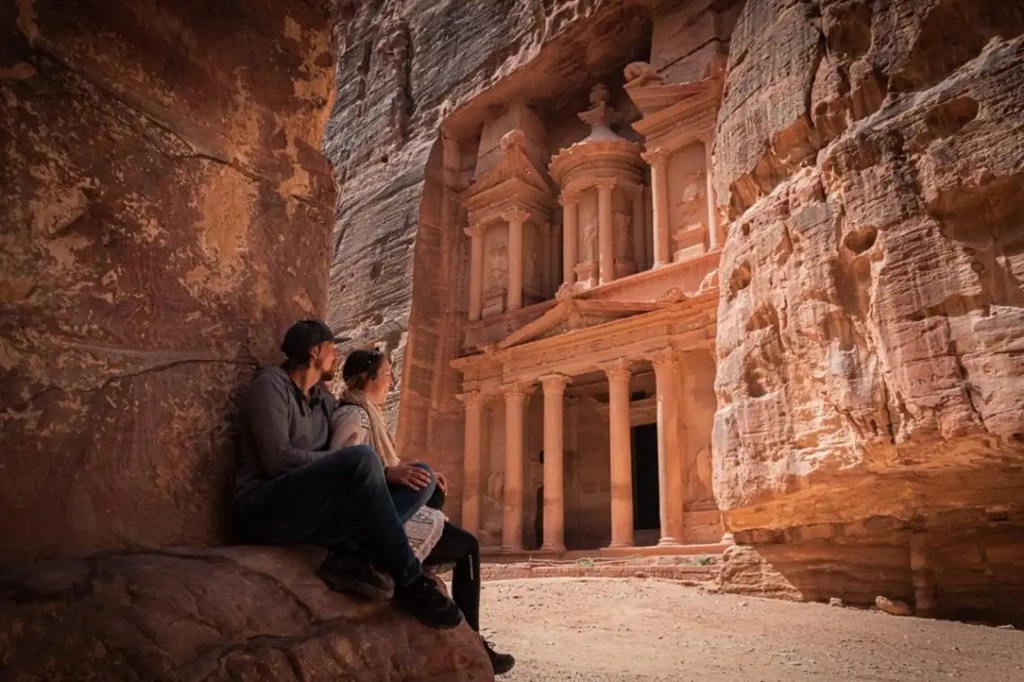
Planning a trip to Petra requires some preparation to make the most of this unforgettable experience.
- Best Time to Visit: Spring (March-May) and autumn (September-November) offer the most pleasant temperatures for exploring. Summers can be extremely hot, while winters can be cold and occasionally rainy.
- Tickets: The Jordan Pass is highly recommended for international visitors staying three or more nights in Jordan. It includes the visa fee and entry to Petra (for 1, 2, or 3 days) along with access to many other sites across Jordan, offering significant savings. Purchase it online before arrival. Remember to carry your passport, as it might be checked at the entrance.
- Getting There: Petra is located near the town of Wadi Musa. Most visitors arrive from Amman (approx. 3-4 hour drive) or Aqaba (approx. 2-hour drive). Rental cars, buses (like JETT), and private taxis/tours are common options.
- Getting Around: Petra is vast and exploring requires significant walking, often on uneven, sandy, or rocky terrain. Wear sturdy, comfortable walking shoes. While walking is the best way to immerse yourself, donkey, horse, camel, and horse-drawn carriage rides are available for longer distances (like up to the Monastery or through the Siq). Be sure to agree on the price beforehand. Golf carts are also available for certain routes.
- Essentials: Carry plenty of water (though it can be bought inside at higher prices), wear sunscreen, sunglasses, and a hat for sun protection. Dress modestly out of respect for local culture – lightweight, loose-fitting clothing covering shoulders and knees is advisable.
- Accommodation: The town of Wadi Musa offers a wide range of hotels and guesthouses, from budget options to luxury resorts, many within walking distance or a short drive from the Petra Visitor Centre.
- Guides: Licensed guides can be hired at the Visitor Centre to provide deeper historical context and enrich your visit.
- Petra by Night: Experience the magic of the Siq and Treasury illuminated by thousands of candles on Monday, Wednesday, and Thursday evenings. It’s a separate ticket and offers a different, atmospheric perspective.
Related: Beyond the Postcards: Discovering Seychelles’ Best Secluded Beaches
Guardians of Stone: Conservation Challenges and the Future
Preserving a site as ancient and exposed as Petra presents significant challenges. The soft sandstone is vulnerable to natural weathering processes like wind and rain erosion, salt crystallization (which causes the stone surface to crumble), and damage from flash floods and earthquakes (Petra lies in a seismic zone). Furthermore, the sheer volume of tourism, while vital for the local economy, can inadvertently contribute to deterioration through foot traffic, touching of the fragile rock surfaces, and changes in humidity within enclosed spaces.
Recognizing these threats, organizations like the Petra National Trust, the Jordanian Department of Antiquities, and international bodies like UNESCO and the World Monuments Fund work tirelessly on conservation. Efforts include continuous monitoring, scientific research into stone decay, restoration of specific monuments, rehabilitation of the ancient water management systems to mitigate flood risks, implementing sustainable tourism practices, and involving the local Bedouin community in preservation efforts and responsible tourism initiatives. Protecting Petra’s Outstanding Universal Value for future generations requires a delicate balance between access and preservation.
Related: Beyond the Crowds: Discovering Switzerland’s Hidden Alpine Hiking Gems
People Also Ask (FAQs)
-
What is Petra famous for?
Petra is famous for its stunning rock-cut architecture, particularly the Treasury (Al-Khazneh) and the Monastery (Ad-Deir), carved directly into pink sandstone cliffs. It’s also known as the ancient capital of the Nabataean Kingdom, a vital trading hub, a UNESCO World Heritage Site, and one of the New7Wonders of the World.
-
How was Petra built?
Petra wasn’t built in the traditional sense; much of it was masterfully carved and excavated directly out of the sandstone cliffs by the Nabataeans over 2,000 years ago. They also constructed some freestanding buildings and engineered complex water management systems.
-
When is the best time to visit Petra?
The best times are during the spring (March-May) and autumn (September-November) when the weather is mild and pleasant for walking and exploring.
-
How much time do I need to see Petra?
While you can see the main highlights (Siq, Treasury, Theatre, Street of Facades) in one long day, Petra is vast. Spending two or even three days allows for a more relaxed pace, exploring further sites like the Monastery and the High Place of Sacrifice without rushing.
-
Is Petra safe to visit?
Yes, Petra and Jordan, in general, are considered very safe destinations for tourists, including solo travelers. Standard travel precautions should always be taken, but violent crime is rare. Jordanians are known for their hospitality.
-
Can you go inside the Treasury?
No, entry into the interior of the Treasury (Al-Khazneh) is currently prohibited to protect the fragile ancient structure from damage. Visitors can admire its magnificent facade from the outside.
Conclusion
Petra is more than just an ancient city; it’s a journey into the heart of human history, ingenuity, and artistry. Walking through the Siq, gazing upon the Treasury, and exploring the vast expanse of tombs, temples, and caves carved into the desert rock is an experience that resonates long after you leave. It stands as a powerful symbol of a lost civilization that masterfully adapted to its environment and played a crucial role in the ancient world. As visitors, we have the privilege of witnessing its enduring beauty, but also the responsibility to tread lightly and support the ongoing efforts to preserve this irreplaceable treasure for generations to come. Petra truly earns its place as one of the world’s greatest wonders, inviting exploration and inspiring awe in all who wander its stone-carved pathways.